Write to Dr. Maria Pisarenko, or send your playing

Leave your email, phone and how you found us. I read every message and listen to every recording myself.

Home / Shop / Music Cables and Power

Chosen by a concert pianist

Best Cables, Adapters and Surge Protectors for a Piano and Home Studio

Buy the plug types your gear actually has: balanced 1/4-inch cables for a digital piano's outputs, XLR for microphones, a USB-B to USB-C cable for the computer, and a surge protector under it all. Plain cables from known makers are enough.

Affiliate disclosure. As an Amazon Associate I earn from qualifying purchases. Some links on this page are affiliate links; buying through them costs you nothing extra.

Shopping from the UK, Canada, Australia or Europe? Amazon links open your local Amazon store when available.

Illustrations show the type of product; see the exact item and its photos on Amazon.
My top 3 picks, before the long list

If you only read one section, read this: one pick for most people, one for a careful budget, one to grow into.

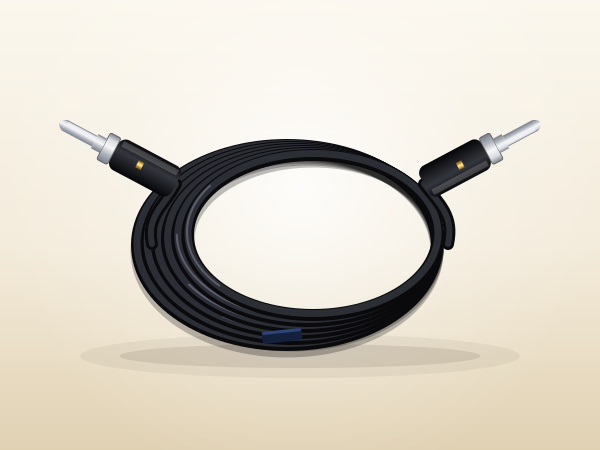
Illustration of a XLR cable — Hosa Hosa HMIC-025 XLR Microphone Cable

Best overall

HosaXLR cable

Hosa HMIC-025 XLR Microphone Cable

A 25-foot XLR microphone cable. A cable is the least exciting purchase in a studio and the first thing to spoil a recording when it fails, so I choose plain, well-made ones.

I suggest it for a microphone placed across the room from the interface.

See it on Amazon
Illustration of an instrument cable — Hosa Hosa HSS-010 Pro Balanced Cable

Best value

HosaInstrument cable

Hosa HSS-010 Pro Balanced Cable

A 10-foot balanced 1/4-inch TRS cable with REAN plugs. Good cables are cheap insurance: the sound you worked for should reach the interface or the speakers unchanged.

I suggest it for a piano with 1/4-inch outputs that you want to wire carefully.

See it on Amazon
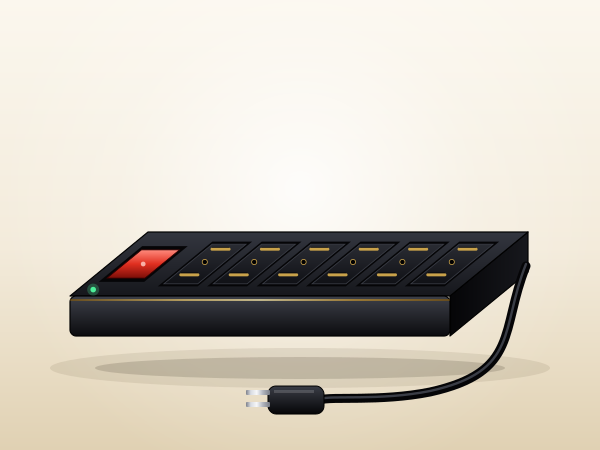
Illustration of a surge protector — Tripp Lite Tripp Lite Isobar HT10DBS Surge Protector

Premium pick

Tripp LiteSurge protector

Tripp Lite Isobar HT10DBS Surge Protector

A ten-outlet metal surge protector. Protecting an instrument you have paid for costs very little, and a surge protector is the simplest way to do it.

I suggest it for a studio with many plugs and equipment you want to protect.

See it on Amazon
Read first
  • You Got a Keyboard for Christmas. Now What?
My guide on this, written for adults learning alone.

Cables are the least glamorous part of a music corner and the part that most often fails. Most beginners need only a handful: a cable from the piano's outputs to an interface or speakers, a USB cable to the computer, a headphone adapter, and a surge protector. I choose plain, well-made cables, and I ask you to check the plug on each end against your own gear before you order.

Why trust a concert pianist's picks?

I recommend this gear because it is what my adult students need to work through my free 41-lesson course and, later, to use with my upcoming method books. I am a concert pianist and a university piano professor, and these are the kinds of tools I look at first when a student asks what to buy.

What should I look for in music cables?

  • The plug on each end. Look at your piano, interface or speakers and match 1/4-inch TRS, XLR, 3.5 mm, USB-B, USB-C or five-pin MIDI exactly.
  • Balanced or unbalanced. A balanced TRS or XLR cable keeps noise out over longer runs.
  • Length. Buy the length you need, not the longest; a long extra loop picks up hum.
  • Strain relief. A cable that bends sharply at the plug fails there first; look for a molded plug with a spring or boot.
  • Surge protection. Count your outlets and check the protector's ratings in the listing.

How do good cables help you?

How this helps you learn: the right cables get your playing onto a recording without noise, and a recording you can trust is how you hear your own progress.

Which cables and adapters should I buy?

Budget picks

7 picks
Illustration of a headphone cable — Hosa Hosa MHE-310 Headphone Adaptor Cable
HosaHeadphone cable

Hosa MHE-310 Headphone Adaptor Cable

A 10-foot cable from a 3.5 mm headphone jack to a 1/4-inch plug. The Hosa Hosa MHE-310 Headphone Adaptor Cable is one of my careful first-budget picks for this list.

I suggest it for connecting a small keyboard's headphone jack to a larger input.

See it on Amazon
Illustration of an instrument cable — Hosa Hosa CSS-110 Balanced Cable
HosaInstrument cable

Hosa CSS-110 Balanced Cable

A 10-foot balanced 1/4-inch TRS cable. The Hosa Hosa CSS-110 Balanced Cable is one of my careful first-budget picks for this list.

I suggest it for connecting a digital piano's outputs to an interface or monitors.

See it on Amazon
Illustration of an instrument cable — Hosa Hosa HSS-010 Pro Balanced Cable
HosaInstrument cable

Hosa HSS-010 Pro Balanced Cable

A 10-foot balanced 1/4-inch TRS cable with REAN plugs. Good cables are cheap insurance: the sound you worked for should reach the interface or the speakers unchanged.

I suggest it for a piano with 1/4-inch outputs that you want to wire carefully.

See it on Amazon
Illustration of a MIDI cable — Hosa Hosa MID-310 MIDI Cable
HosaMIDI cable

Hosa MID-310 MIDI Cable

A 10-foot five-pin MIDI cable. The Hosa Hosa MID-310 MIDI Cable is one of my careful first-budget picks for this list.

I suggest it for an older keyboard or module that uses five-pin MIDI.

See it on Amazon
Illustration of a USB cable — UGREEN UGREEN USB-B to USB-C Cable, 10 Feet
UGREENUSB cable

UGREEN USB-B to USB-C Cable, 10 Feet

A 10-foot braided cable from a USB-B port to USB-C. The UGREEN UGREEN USB-B to USB-C Cable, 10 Feet is one of my careful first-budget picks for this list.

I suggest it for connecting a digital piano or interface with a USB-B port to a modern laptop.

See it on Amazon
Illustration of a surge protector — Tripp Lite Tripp Lite TLP606B Surge Protector
Tripp LiteSurge protector

Tripp Lite TLP606B Surge Protector

A six-outlet surge protector. The Tripp Lite Tripp Lite TLP606B Surge Protector is one of my careful first-budget picks for this list.

I suggest it for a piano corner with a piano, a lamp and a laptop.

See it on Amazon
Illustration of a USB MIDI cable — LEKATO LEKATO USB MIDI Cable
LEKATOUSB MIDI cable

LEKATO USB MIDI Cable

A USB cable that carries five-pin MIDI in and out. The LEKATO LEKATO USB MIDI Cable is one of my careful first-budget picks for this list.

I suggest it for connecting an older five-pin keyboard to a computer.

See it on Amazon

Mid-range picks

3 picks
Illustration of an instrument cable — Pig Hog Pig Hog PTRS10 TRS Cable, 2-Pack
Pig HogInstrument cable

Pig Hog PTRS10 TRS Cable, 2-Pack

Two 10-foot 1/4-inch TRS cables. The Pig Hog Pig Hog PTRS10 TRS Cable, 2-Pack is one of my mid-range picks for this list.

I suggest it for wiring both outputs of a stereo piano.

See it on Amazon
Illustration of a XLR cable — Hosa Hosa HMIC-025 XLR Microphone Cable
HosaXLR cable

Hosa HMIC-025 XLR Microphone Cable

A 25-foot XLR microphone cable. A cable is the least exciting purchase in a studio and the first thing to spoil a recording when it fails, so I choose plain, well-made ones.

I suggest it for a microphone placed across the room from the interface.

See it on Amazon
Illustration of a headphone cable — Hosa Hosa HXSS-010 Headphone Extension Cable
HosaHeadphone cable

Hosa HXSS-010 Headphone Extension Cable

A 10-foot extension for a 1/4-inch headphone plug. The Hosa Hosa HXSS-010 Headphone Extension Cable is one of my mid-range picks for this list.

I suggest it for sitting back from the piano with headphones that have a short cord.

See it on Amazon

Premium picks

2 picks
Illustration of a surge protector — Tripp Lite Tripp Lite Isobar HT10DBS Surge Protector
Tripp LiteSurge protector

Tripp Lite Isobar HT10DBS Surge Protector

A ten-outlet metal surge protector. Protecting an instrument you have paid for costs very little, and a surge protector is the simplest way to do it.

I suggest it for a studio with many plugs and equipment you want to protect.

See it on Amazon
Illustration of a DI box — Radial Radial Pro DI Passive Direct Box
RadialDI box

Radial Pro DI Passive Direct Box

A passive direct box that balances a keyboard's output. The Radial Radial Pro DI Passive Direct Box is one of my premium picks for this list.

I suggest it for a stage piano that must run a long cable to a mixer.

See it on Amazon

What do players ask about cables and power?

What cable connects a digital piano to an audio interface?

Usually two 1/4-inch cables, one for left and one for right, from the piano's line outputs to the interface's line inputs. Check your piano's output jacks first.

Do I need an expensive cable?

No. A plain cable from a known maker with solid plugs is enough. Expensive cables do not make a digital piano sound better.

What is a USB-B cable used for?

Many digital pianos, interfaces and MIDI keyboards have a square USB-B port. A USB-B to USB-C cable connects them to a modern laptop.

Do I need a surge protector?

A surge protector is a cheap way to protect a piano and a computer. Plug the piano's power supply into it and check the listing for what it covers.

Shopping outside the US? Do these links work in the UK, Canada, Australia or Europe?

Yes. The links go to Amazon.com and open your local Amazon store when the model is sold there: the UK, Canada, Australia, Germany, France, Italy, Spain, the Netherlands, Poland, Sweden and Singapore. Models, voltages and plugs differ by country, so on your local listing check for the 230-volt or UK-plug version of a digital piano or a suitable mains adapter, and check that the sustain pedal, bench (keyboard stool) or keyboard stand you want is sold in your country. If a model is not sold locally, the page will say so.

Where should you read next?

What else might you need?

Would you rather learn than buy more gear?

The shop exists to support your learning. The learning itself can start free: all 41 lessons of my beginner course are published, and I give feedback on your playing at no charge. When you want a teacher, I take private students online. I am also preparing a method book series for adults who learn alone.

Questions? Want feedback on your playing?

Send a message or attach a recording. Email, phone and how you found us help me answer you properly.

Free guide

Get my free Adult Beginner’s Piano Starter Guide

The first steps to start the right way — no bad habits to un-learn. Join fellow beginners learning with a real university teacher.

✓ Thank you — check your inbox!

No spam — just piano. Unsubscribe anytime.

Piano lessons by age

Every decade brings its own music and its own obstacles. Find the plan for yours:

Learn piano in your 20s · Learn piano in your 30s · Learn piano in your 40s · Learn piano in your 50s · Learn piano in your 60s · Learn piano in your 70s and beyond

Write to Dr. Maria Pisarenko, or send your playing

Online Piano University is run by one teacher. I read every message and listen to every recording myself.

Contact

maria@onlinepianouniversity.com

Full contact page
Feedback on your playing
Free 41-lesson course
Piano lessons by age

Free Starter Guide

✓ Thank you — check your inbox!

Follow along

YouTube · Instagram · Facebook · TikTok · Pinterest