Leave your email, phone and how you found us. I read every message and listen to every recording myself.
Retirement gives you the one thing a pianist needs most: unhurried time. This course gives you the order in which to use it.
People begin in their sixties because there is finally time, or because a parent's piano is now in their living room, or because they have wanted to play for fifty years. All three are good reasons.
The lessons are free, in order, and unhurried. You can pause, repeat and come back next week without losing anything, and when you are ready you can send a recording and hear from me in writing.
Retirement is a rare time when nobody sets your goals. A structured course gives your days a shape and your week a reason to look forward.
The pieces you promised yourself, a real daily practice, and a way to keep your mind and your fingers working at something beautiful.
To become, in your sixties, the person who plays the piano at the family gathering or for the church choir, is a status of skill. It does not depend on your title, and it cannot be taken away.
What adult students say about Dr. Maria Pisarenko as their teacher · 5.0★ on Yelp, 4.9★ on Google.
★★★★★
“After being away from piano lessons for 15 years, I'd always wanted to start up again... Dr. Pisarenko is a great instructor for me. She's kind and patient and encouraging... very reasonable rates and top notch instruction. She's the best!”
— Guillo L., returning adult student · Yelp
★★★★★
“A very knowledgeable teacher and an outstanding pianist... Her attention to detail and expression is incredible. I recommend Masha to all of my friends and everyone is delighted with her instruction.”
— Katerina W., adult student · Yelp
★★★★★
“I took piano lessons for a few years as a kid... Dr Pisarenko has been wonderful!!! She is very patient, very flexible with scheduling and I have learned so much from her in such a short period of time!”
— Sarah K., adult beginner · Yelp
The songs that were the soundtrack of your youth, and the pieces you have always loved to listen to.
Tell me which one you want and I will point you to the lessons that lead to it. Write to me or start the course and aim at it from day one. Titles are named for reference; the sheet music for each is published by its own rights holders.
Send a message or attach a recording. Email, phone and how you found us help me answer you properly.
Speed is the last thing to arrive and the least important. The first goals are an even sound and a relaxed hand, and both are achievable at any age. If a joint hurts, check with your doctor first.
Choose editions with large print, put a lamp on the music and stand the book higher. Reading is learned in small steps, and the course introduces each symbol only when you need it.
Short daily practice beats long weekly sessions. A one-line log of what you practiced keeps the thread.
It is not. Adult beginners in their sixties and seventies play real music with real expression. The goal is not a concert career; it is playing the music you love.
Weighted keys and a sturdy bench make a bigger difference than people expect. My gear page explains what to choose and what to avoid.
Lesson 1, no pressure. Sit comfortably, find the notes and play your first melody by ear.
One lesson at a time. Twenty minutes a day is enough. Rewatch freely.
Send a recording for feedback. Choose a piece from the list that you have always wanted to play.
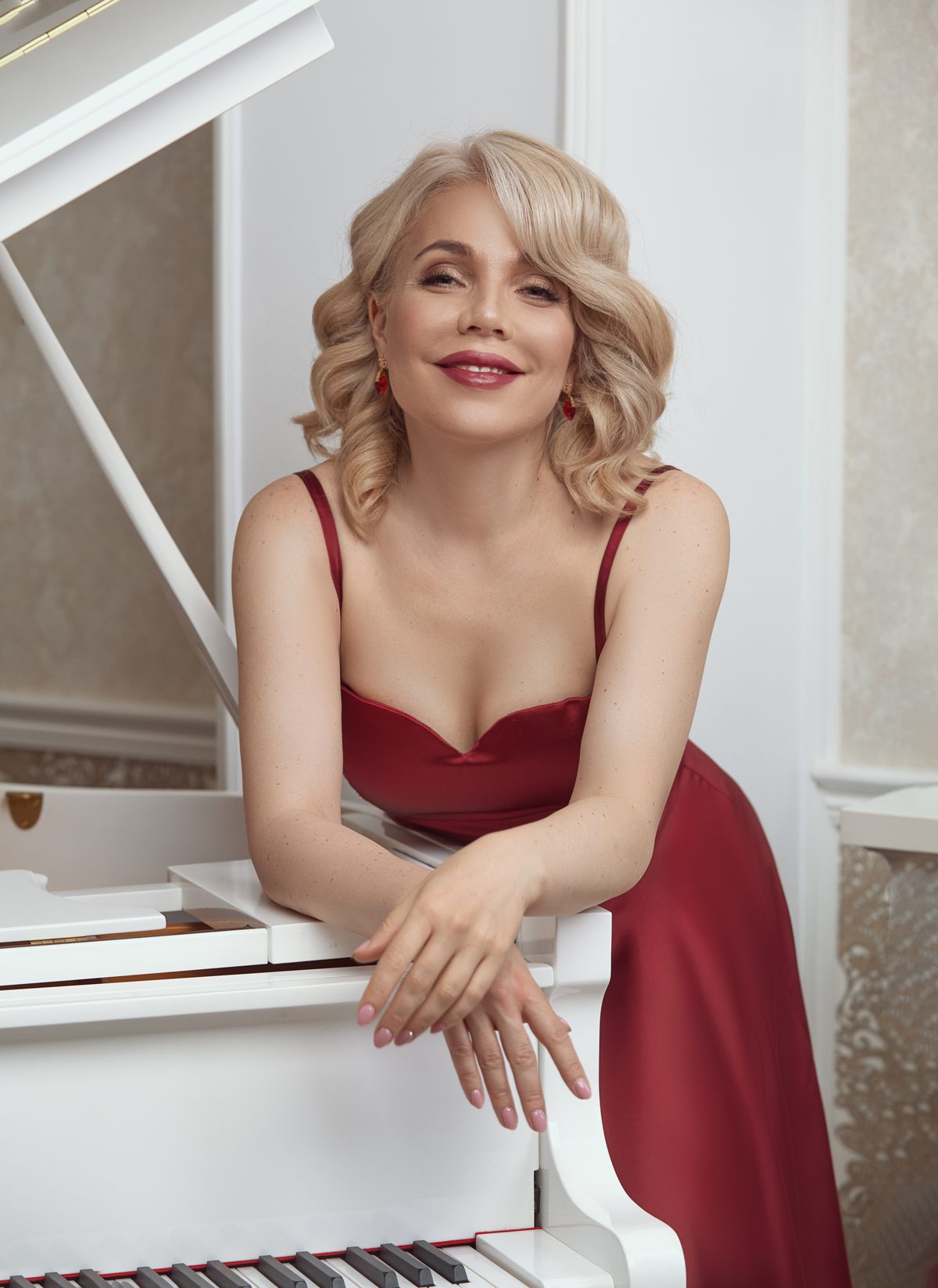
I am Dr. Maria Pisarenko, DMA, a concert pianist and university professor. I trained in the Russian school at the Central Music School of the Moscow Conservatory and the Gnessin Academy, and I teach at the college level. My work with adult beginners is the reason this course exists. You can read what the press and students say on the press and reviews pages.
I am writing a piano method book for adults who teach themselves, built on the same order as these lessons: sound first, then the hand, then the page. A free note-reading practice app is also in development. Both are works in progress, and anyone on my email list hears first. Join the list or see the books and gear I recommend now.
The first steps, the right instrument and how to practice, in one free PDF from Online Piano University.
✓ Thank you — check your inbox!
No spam — just piano. Unsubscribe anytime.
No. Many adults start in their sixties and play real pieces within months. The course moves at your pace and nothing in it is timed.
Follow a structured course in order, use a weighted keyboard, practice a little every day and get feedback on a recording. That sequence works better than random videos.
Yes, after the first stages of the course. Both rely on chords and a calm left hand, and both are very common first goals.
Start with how you sit and how the hand rests on the keys, then a simple melody by ear, then reading. Lesson 1 of the free course does exactly that, at a pace you choose, with large clear notation.
Other decades: Your 20s · Your 30s · Your 40s · Your 50s · Your 70s and beyond · All ages
Online Piano University is run by one teacher. I read every message and listen to every recording myself.
Contact
maria@onlinepianouniversity.com
Full contact page
Feedback on your playing
Free 41-lesson course
Piano lessons by age
Free Starter Guide
✓ Thank you — check your inbox!
Follow along