Leave your email, phone and how you found us. I read every message and listen to every recording myself.
You can learn almost anything from a screen. Piano is the one skill where the screen quietly teaches your hands to do the wrong thing. Here is how to avoid that, for free.
You are probably learning from videos, an app, or both. That works for the first month. Then the same thing happens to almost everyone: you can follow the colored bars, you cannot read a page of music, and the pieces you actually want stay out of reach.
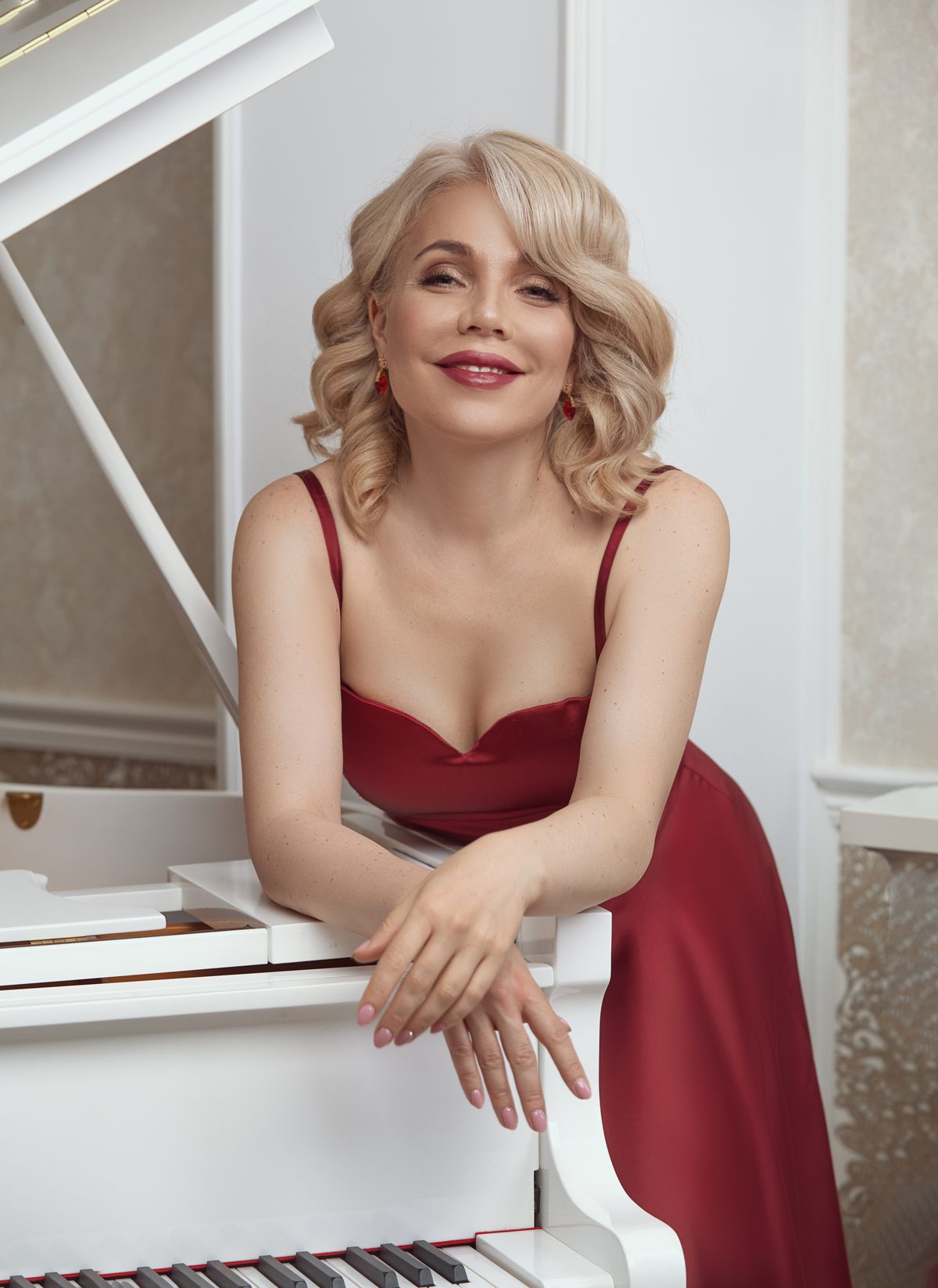
I am Dr. Maria Pisarenko, a concert pianist and university professor, and Online Piano University is the free course I built for adults who teach themselves. It starts with the sound and the hand, so your first year is not something you have to undo later.
Reading music is a skill almost nobody your age has. Within a few weeks you go from copying colored bars to understanding a page, and every new piece after that starts from something, not from zero.
Play the themes you already love (Ghibli, Zelda, Zimmer, Billie Eilish) from the score or by ear, and write your own simple accompaniments instead of waiting for someone to post a tutorial.
Most friends and partners can scroll. Few can sit down and play. Being the person who plays, properly, is a quiet, durable kind of standing that no feed gives you.
What adult students say about Dr. Maria Pisarenko as their teacher · 5.0★ on Yelp, 4.9★ on Google.
★★★★★
“I've spent years struggling to find the passion to stick with piano, and I finally found a teacher who exceeded any expectations I had for myself. Dr. Pisarenko's No Red Button philosophy has transformed me from a timid perfectionist into a player with realistic goals, a clear understanding of what it takes to achieve them, and a step by step path to actualize my version of success with the piano.”
— Sterling D., adult student · Yelp
★★★★★
“I took piano lessons for a few years as a kid... Dr Pisarenko has been wonderful!!! She is very patient, very flexible with scheduling and I have learned so much from her in such a short period of time!”
— Sarah K., adult beginner · Yelp
★★★★★
“A very knowledgeable teacher and an outstanding pianist... Her attention to detail and expression is incredible. I recommend Masha to all of my friends and everyone is delighted with her instruction.”
— Katerina W., adult student · Yelp
The music of your teens and early twenties, the pieces people in your decade most often hum at a keyboard.
Tell me which one you want and I will point you to the lessons that lead to it. Write to me or start the course and aim at it from day one. Titles are named for reference; the sheet music for each is published by its own rights holders.
Send a message or attach a recording. Email, phone and how you found us help me answer you properly.
Tutorials where colored bars fall onto a keyboard get you through one song. They do not teach you the page, so every new piece starts from zero. Reading is a skill that takes weeks, not years, if it is taught in the right order.
Hunching over a laptop keyboard or a cheap stand-alone keyboard sets the hand up to squeeze instead of to carry weight. It feels fine for a month and then your forearm tells you otherwise.
That is a good instinct, and we use it. The free course gets you playing a real melody on day one, and it builds the specific skills (finger independence, pedal, a singing line) that Clair de Lune and River Flows in You need.
A weighted 88-key digital piano with headphones is enough. I list what I recommend, and why, on the Books and Gear page. You do not need an acoustic piano.
Short daily practice beats weekend marathons. The course is built in twenty-minute lessons so that missing a day never costs you the thread.
Lesson 1 of the free course. Learn to sit, to find any note, and to play your first melody by ear.
Lessons 2 to 8: the staff, note values, both hands. Practice twenty minutes a day, six days a week.
Record yourself and send the recording for written feedback. Choose one piece from the list above as your goal.
I am Dr. Maria Pisarenko, DMA, a concert pianist and university professor. I trained in the Russian school at the Central Music School of the Moscow Conservatory and the Gnessin Academy, and I teach at the college level. My work with adult beginners is the reason this course exists. You can read what the press and students say on the press and reviews pages.
I am writing a piano method book for adults who teach themselves, built on the same order as these lessons: sound first, then the hand, then the page. A free note-reading practice app is also in development. Both are works in progress, and anyone on my email list hears first. Join the list or see the books and gear I recommend now.
The first steps, the right instrument and how to practice, in one free PDF from Online Piano University.
✓ Thank you — check your inbox!
No spam — just piano. Unsubscribe anytime.
You can start that way, and many people do. The risk is that nothing corrects your hand position or your reading as you go. The free course here is built so that the lessons come in a fixed order, and you can send a recording of your playing for feedback.
Learn chords and a steady left hand first, then add the melody. The course covers chords, so the pop songs on this page stop being separate projects and become variations on one skill.
No. A digital piano with 88 weighted keys is the right target, and a good one costs far less than an acoustic piano. The gear page lists the ones I recommend.
No. Adults in their twenties learn to read music faster than children do, because they understand patterns. What decides how good you get is practice that is ordered and corrected, not the age you start.
Other decades: Your 30s · Your 40s · Your 50s · Your 60s · Your 70s and beyond · All ages
Online Piano University is run by one teacher. I read every message and listen to every recording myself.
Contact
maria@onlinepianouniversity.com
Full contact page
Feedback on your playing
Free 41-lesson course
Piano lessons by age
Free Starter Guide
✓ Thank you — check your inbox!
Follow along